We are more than code. Accepted, one might argue we are entirely made from DNA code, but my point is we are made of something more than the lines of code found inside the AI-driven machine learners now assisting us.
As an educator, one might say I have a vested interest in highlighting the differences between us and the artificial us. If knowledge retention and recall continue to dominate the school agenda and define our output, then my job in teaching, like many others’, risks becoming obsolete – because it is precisely this type of cognitive ability or computational capacity that has already been bettered by the digital devices in our hands; and yet still we measure, sort and rank generations of freshly-minted humans using a reductive metric unchanged since Forster’s Act. ‘Read, write and remember when you’re in class, and ignore the inconvenient truth that beyond the classroom the artificial you is doing the same in a fraction of the time and on behalf of all of us.’
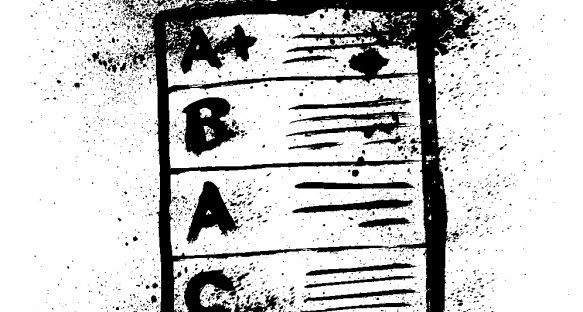
How long must we go on pretending? We all know that schools are doing wonderful things to develop well-rounded, creative and caring school leavers, but this is overshadowed, and for some, dismantled, by the two-dimensional list of grades nervously removed from that brown envelope in August. The curriculum can be enriched and broadened all your like, but it will always be reduced to data come results day.
Speaking at a conference I attended many years ago, philosopher A C Grayling told the Wellington College audience that education is not only about the acquisition of knowledge, but the acquisition of understanding, and that’s different.
Understanding, for me at least, is a synthesis of learned knowledge and assimilated experience. The two are often pitched against one another: deductive versus inductive, a priori versus a posterior, or that which we reason pitched against that which we feel. We all know propositional knowledge is as valuable as empirical, and polarising these is pointless.
We comprehend through a blend of deductive reasoning and empirical evidence drawn from our senses, but there is another definition for understanding, far beyond that of comprehension, that offers up a mandate for the paradigm shift we need in the school agenda.
To understand is to sympathise, to empathise, to imagine, to accept and embrace difference, to forgive, to feel and to know what it feels like.
It is this aspect of understanding that reaches far beyond code, to the deep-down things that make us human. And as educators, we have a significant part to play in guiding and leading our students towards enlightenment.
American educationalist, Eric Jensen, tells us, ‘How we feel is what is real; it is the link to what we think.’ And yet so much academic learning in school seems abstract, stripped of emotion, which is reserved for the playground. To be ‘sensitive’ is to be weak. I’ve never quite understood how the term has become a criticism levelled at those who feel too deeply or allow their emotions to dominate their cognitive skills. Jensen is right, how we feel does indeed seem real. If you have a gut feeling it’s because you have 500 million neurons in your gastrointestinal tract; we don’t just think with our brains.
The late, great, Sir Ken Robinson reminded us all that education should be an aesthetic experience but it has become an anaesthetic one.
How we feel has a bearing on who we are, what we achieve, what we think and, crucially, how we come to understand ourselves and others. Such understanding brings discernment so that we can identify what is worth knowing and what isn’t, what is truthful, what is harmful and what is beneficial.
And yet our ability to feel, to imagine and to discern, is not visible through a traditional school data lens and so it does not allow us to show pupil progress like a cognitive ability test does. Consequently, if it cannot be assessed, it will always remain peripheral to the school agenda. These capacities are not recognised or celebrated inside that envelope in August.
We are, and will always remain, more than code. With the march of machine learning, now is our last chance to create an education system that, whilst still championing the wonder of knowledge and the beauty of reason, welcomes in a new curriculum that celebrates both the magnificent fragility and the incalculable power of human emotion. We need to recognise that understanding encompasses more than a grasp of knowledge; it calls for intuition, empathy, discernment, social responsibility, care, hope, health and resilience. These qualities should be rescued from the fringes of the playground and the lunch hall, where they currently reside, so they may be harnessed and used to inform a new agenda for how we educate children for life. When we let go of our reliance on quantitative assessment data to verify that our pupils are ‘being taught properly’ and have ‘passed or failed their education’, we will finally unlock their unique potential and equip them with the toolkit they need to live alongside AI, and live well.
Our capacity to understand ourselves and each other is irrefutable proof that we are more than code.

 Andrew Hammond