What it means to be human and what that means for schools

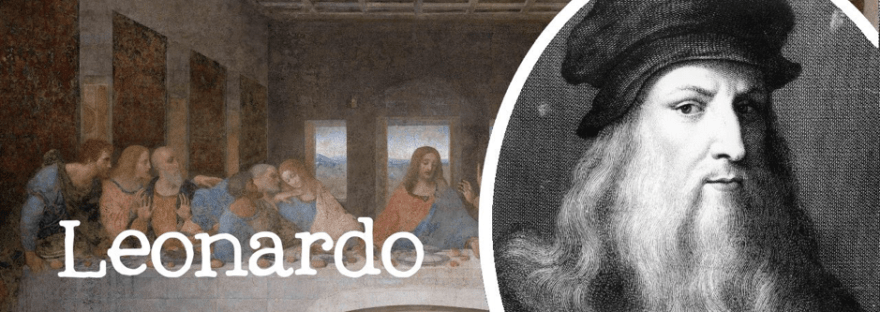
Leonardo da Vinci, the greatest polymath of them all, and surely the best champion for human potential, described himself as an omo sanza lettere – a man without letters, without an education.

There may be young Leonardos in my class today. He was, after all, and quite reassuringly for all of us, ‘only human’. But it would be hard to spot a Leonardo or Leonora from the attainment or progress data available to me, for the way in which we measure intelligence is so narrow that it would hide the voracious and prolific creative talents of another da Vinci. How would we know? Neither the models of assessment adopted, nor the methods of teaching and managing behaviour employed in schools are receptive or conducive to creative impulses and disruptive, rebellious thinking. A young Kant or Descartes would be equally hidden too; metaphysical or existential musings are rarely given airtime when you’ve got SATs to prepare for.

The multiple intelligences so eloquently described by Howard Gardner, and so deftly demonstrated by Leonardo centuries before, seem absent in all but the most enlightened examination systems upon which most school curricula are built. The 3Rs of reading, remembering and regurgitating marginalise more creative geniuses than they empower.

Computational capacity reigns king. Rationality is what counts, because it can be counted. That is to say, intelligence in school today is universally measured via logic and reasoning tests. Even English papers have been reduced to multiple-choice format these days, prejudicing the creative thinkers in my class who would otherwise have used some creative thought to extrapolate, hypothesise, empathise and infer authorial intent. ‘Don’t think about it, go for the obvious, logical choice’ is the favoured strategy, so I’m told. There’s always a formula you can learn, a rational method to be applied; you can score highly if you practise often enough, even increase your IQ by a few percentage points. Another blow for the young Byrons or Brontes in my class.

Perhaps it was with some irony that Alfred Binet, father of the IQ test, concluded that ‘Intelligence, like love or beauty, is immeasurable.’ Why then are we intent on measuring it, and in such narrow ways? As we stand on the brink of artificial intelligence dominating our lives, isn’t it time to re-discover the full extent of human intelligence, beyond our capacity to process information and apply deductive logic?

Children enter school blissfully unaware of how clever they really are; but they leave school with a rigid and fixed notion of their ‘intelligence’ or lack of it. Using a narrow set of criteria, school asks us ‘How smart are you?’, when ‘How are you smart?’ might be a better question. Can you experiment, adapt and improvise? Can you embrace ambiguity and make sense of it? Can you assimilate, innovate and invent? As Piaget said, intelligence is what you use when you don’t know what to do.

Reducing the ability of students to their capacity to apply logic and rational thought in response to binary questions, puzzles and patterns, and against the clock too, is to deny what it means to be human, and to set us up perfectly for being usurped by AI. And it’s pointless, because no child can compete with the computational capacity of the smartphone permanently attached to their hand.

If we define intelligence as the ability to process information rapidly and apply inductive or deductive logic, students will calibrate their own intelligence accordingly, and forever do so. What’s more, they will compare themselves unfavourably with the barrage of artificial intelligences that come at them.

Leonardo teaches us we are missing the point if we calibrate our capacities and potential in this limited way. I don’t know what his measured intelligent quotient would have read. It depends on how he was feeling that day, whether he was distracted or not, or feeling dreamy, or fidgety, or inventive.

If a revolution in education is indeed coming, let it not only be based on what AI can do for us; let it be driven by what we can do that AI can’t. May it force us to re-discover what it means to be human, just what and where our potential is and how best we can unlock it in the formative years of school.

Michael Gelb (1998) suggests seven Da Vincian Principles for us to emulate if we want to ‘think like Leonardo Da Vinci’. Of the seven, Sfumatomay be the most significant if we are to unlock our creative potential. Gelb describes this as a willingness to embrace ambiguity, uncertainty and paradox. Sfumatomay well be our most highly-prized capacity and one which cannot be emulated by a machine.  But where is the uncertainty in a formally taught, rigidly timetabled curriculum?

Schools are places in which calculations and rational decisions dominate, and for this there will always be a more efficient and more advanced learning partner in technology. Robotics will soon outperform us in many areas of our lives, including school. But the skills in which technology far exceeds us – reading, processing and applying information – are themselves recent phenomena and not, in any way, attributable to the fact that we find ourselves in that elite club of species still in existence on the planet. We did not survive this long because of our ability to read or solve mathematical problems. Our longevity is due to the deep-down-things that make us human – those ‘harder to teach/harder to measure’ qualities factory-fitted in all of us, like creativity, instinct, intuition, curiosity and so on.

Einstein tells us, ‘The intuitive mind is a sacred gift and the rational mind is a faithful servant. We have created a society that honours the servant and has forgotten the gift.’ Intuition allows us to ‘know’ something before we have analysed it rationally. It bridges the gap between our conscious and non-conscious mind. To intuit something is to subconsciously draw on one’s myriad sensory perceptions to reach a notion of what is going on around us, how we should respond and what we should do next. Intuition is a compass. The problem is, our rational mind often overrides any instinctive impulses and we reach a different conclusion based on reasoned analysis. Though rationality is precious, it can mislead us; it gives us a false notion of what human behaviour is. Take listening for example: if you were asked to listen carefully to something, you would probably lean in, lower your eyebrows and frown. None of these actions help you to hear better. No more than sitting still behind a desk helps you to learn better. These are false constructs and we believe them.

Leonardo might tell us that an education should be an aesthetic experience, but right now it’s an anaesthetic one, where sensory perception has a lower value than rational thought. Students in school are told to focus and remain ‘on task’. An ability to concentrate is highly prized in classrooms – and this means shutting off most of our sensory receptors in order to attend to what the teacher is saying to us, or to read carefully the text in front of us. ‘Stay in your learning bubble.’ ‘Manage your distractions.’

Try as I might, I may never aspire to the concentration levels of the computer sat in front of me. It doesn’t fidget and it doesn’t procrastinate. It gets on with the job. If it has senses at all, they are primed and ready to do a specific task and are not open to distraction. The student who can work like a computer – receiving, processing, retaining and recalling information efficiently and without distraction – will sail through school examinations. But for most us, data does not enter our central processing unit in 1s and 0s only.

There is more to being human than data-processing.  Our senses equip us to deal with the unexpected hazards, challenges and beneficial opportunities that float past us daily. To anesthetise students from such experiential learning is to reduce their human potential before they’ve even found it.

We have Aristotle to thank for the notion that we humans have just five senses. Pleasingly, we have many more: chronoception (our sense of time), thermoception (our sense of heat), equilibrioception (balance), nociception (pain) or proprioception (touching your nose or ear without looking at them), to name but a few. But even if we took just the standard five, with such powers of perception we are functioning at a level never attainable by AI, not because any of these sensory receptors aren’t in themselves able to be artificially simulated – I am sure they are/will be soon – but precisely because of the way they perform together in a glorious symphony of interpretation, emotion and thought. But sadly all too often, rational, logical thought trumps these innate skills.

With all this rapid reasoning in school, to describe someone as ‘very sensitive’ is not to pay them a compliment. And to pause in a discussion, in order to think in a measured way, is to render yourself ‘slow’, vulnerable to an early diagnosis of poor information-processing ability. Perhaps this is why so many of my students these days precede every verbal utterance with the word ‘wait’.

Speed isn’t everything. Deep learning requires time, and so too does relationship-building, problem-solving and creating something original and of value. The speed with which can we process information, and the time it takes for us to retrieve and apply logic and reasoning skills is not indicative of our natural ability – no more so than an academic score in an exam is an accurate measure of a learner’s ability either now or in the future. This is a myth peddled in school. What a child shows that she knows in response to a given set of questions is held to be an accurate measure of her ability as a learner, both now and in the future. This is wholly flawed thinking but it can become a self-fulfilling prophecy if we let it.

This begs the question, ‘What is learning?’ which leads us to ‘What is the purpose of school?’

I know what the purpose of school is not. It is not to sort and rank students by their academic ability. The purpose of school is to facilitate human growth, but nothing stifles growth more than being sorted and ranked. When students are being ranked via their academic ability, the resulting anxiety and fear of failure not only stifles their creativity, it slows down their information-processing speed too – the very thing which formal education seems to treasure.

Artificial intelligence can streamline so many aspects of education, from admissions, data storage and information management, through to marking and reporting. Intelligent tutoring systems will automate feedback given to students and this will no doubt be very appealing to over-worked teachers, myself included. But as teachers, it is our emotional intelligence, combined with our past experience of working with children, that enables us to recognise, instinctively, when a child is suffering from low self-esteem or a lack of motivation in the classroom. And it is difficult to see how that can, or should, ever be replaced. It is our sensory perception that gives us that all-important, all-seeing eye in the classroom. As model learners, it is our humanity that exerts the greatest influence over the outcomes we see in school.

In order to preserve and develop the full spectrum of human facets through school, we need a paradigm shift in the way we talk about learning. We need a new script. For the language of learning used in most schools is reductive, placing too much emphasis on our ability to think rationally, and solve problems logically and analytically. The way we interpret certain words, most frequently used in our learning commentary, may be so reductive that it impacts negatively on the learning itself.

Take the word resultsfor example. It is so often conflated with the word performance. As a parent of four children, I was often seated on the other side of the table at those speed-dating, 5-minute parent/teacher sessions. When I asked the question, ‘How has my son performed this term?’ I was usually told, ‘He performed well he English, he achieved an A. He performed very well in Mathematics, achieving an A*. He performed quite well in French, with a B, and not so well in Geography, achieving a C.’

The question I asked had been misinterpreted here. I enquired about my son’s performance, but I was only told the results of his performance. I was offered no commentary at all about the performance itself – the learning habits, attitudes, behaviours and perspectives that make him the learner he is; nothing about his creativity, his intuition, the ways in which he collaborates with others, his communication or his character.

When learning performance is reduced to alphabetical or percentagised results, we are left none the wiser about the hidden learning that lies behind these grades.

That’s why I devised the Hidden Learning Program. It is the script with which teachers can identify, monitor and comment on their students’ attitudes, behaviours and skills for learning. I hope it will help us to shed light on the invisible things that make us human. Those facets and perspectives that lie beyond the grade – beyond pupils’ verbal reasoning and intelligence quotients.

Do get in touch if you’d like a discussion about how you can become a partner school and trial the program with me. This is not a sales pitch, because the program is free. I want to work with like-minded leaders and teachers who can see the hidden potential in their students and want to do something about it.

www.andrewjhammond.com

www.hiddenlearning.co.uk

Read more about hidden learning in the Invisible Curriculum Series by Andrew Hammond, published by John Catt Ltd



The value of play

Snow swept across my school overnight and left it closed today, lying under a blanket of white. Living alone on site, I’ve had plenty of time to gaze out of my classroom window and reflect on snow-covered days spent in my garden in the 1970s. We built a full-size igloo once; it lasted for days. I hope very much that my students are all at home in their gardens doing the same and playing freely. After all, there is no homework set for them today, as the treadmill lies tantalisingly still for a brief moment in time.

Days like today remind us of the true value of home, family and most of all, play.

Free play, of the kind I experienced as a child, seems to be on the decline, replaced as it has been by purposeful, often target-driven activities that result in something – a music certificate, a karate belt, a winning goal or a coveted pass in a school pre-test or 11+ exam. The intended aim is clear and it drives the activity. Apparently children respond to targets.

I spent my school nights and weekends riding up and down the street with the kids in my neighbourhood, or digging holes at the bottom of the garden, or building futuristic modes of transport out of Lego. Yes, I played rugby for my local club and I worked hard for my badges in Scouts, but I spent just as much time battling boredom at home with invented games that pushed my imagination outwards.

Of course, such anecdotes are branded nostalgic now. They make me seem old – a misty-eyed romantic, perhaps even naïve. Children don’t have time to play idly these days, there is much to do! They need to be kept busy!  And playing outside is so dangerous. (Perhaps it seems dangerous because no one else is playing outside).

I praised a child in class recently for producing two pages of creative writing in double-speed during a short lesson. He replied, ‘Well, you see life’s short, so you have to get on with, Sir.’

Whilst I admire his industry, this troubles me. Who dropped that little thought into his head? Who gave him the impression, already, that life’s not a rehearsal and you have to seize the day and ‘get it right’. God willing, life is long but childhood is short and to hurry children through it seems criminal. The cruel irony is that the most fulfilled adulthood is built on a childhood freed from the pressing need to prepare for being a grown up.

I’ve always battled with a contradiction: I think school plays too significant a role in children’s lives, and yet I’m so very passionate about the value of school. Though none of us intended it, the language of learning in school – achieving, succeeding and making progress – has seeped into children’s leisure time too.

But time has not sped up. Minutes and hours are the same length that they were when I was a child. We are still given the same amount, God willing. It only seems like time is in short supply because now we have to account for each minute and an afternoon of playing needs to result in something. But I fear this is how childhood melts away.

Most of the ‘results’ of my leisure activities as a child were hidden from view. They were qualities like resilience, resourcefulness and friendship. They were roots that grew beneath the surface, or foundations upon which I would build an adulthood. I didn’t know that I was preparing for my grown up life when I was struggling and failing to make the Lego model I had in my mind, or trying hard to stay friends with the difficult boy next door, or digging for hours in the garden and finding nothing.


Just like snow, childhood is fleeting. It was never intended to be here forever. I worry for the adults of the future whose childhood was diarised and micro-managed. They may not be so rooted in resilience and resourcefulness now. They not be as happy.

But school can, and should, be a champion for childhood. We can reassure children and their anxious parents that time spent playing is okay; in fact it’s essential. And you don’t always have to account for it; the impact will be seen later.

I hope it’s snowing again tomorrow. I’ll go outside and make a snow-angel.


Lesson planning, da Vinci style

I only read educational theory books these days, which seems blinkered, I know, but I enjoy them. That’s not strictly true – I read other books too, but like a boomerang, the inferences and interpretations I throw at them always bounce back to education somehow.

Of all the titles shoehorned into my shelf, there is one that contains more post-it notes and scribbles than any other; it’s tatty now and well-thumbed. That’s because it stands head and shoulders above the rest, in my opinion. It’s not a book on education, per se. It does not refer specifically to teaching and learning, assessment or classroom layout. Neither does it call for an educational revolution or paradigm shift in the way we teach, like so many do.

The book is Michael Gelb’s How to think like Leonardo da Vinci. I know it sounds like another personal growth guidebook, of which there are many these days, and it is, but it’s a good one and its relevance to my daily work as a teacher is significant.

I’ve always been obsessed with Leonardo and I’m sure I am not alone. Filled with an unquenchable curiosity and, in his own words, ‘impressed with the urgency of doing’, he is the archetypal polymath, the best example I know of someone who busts the myth that we have left-brain or right-brain tendencies. He is beyond categorisation, a genius in each of the fields he worked in. His legendary sketch books are both works of artistic genius and ground-breaking landmarks in science and engineering.

Gelb has studied Leonardo’s life more closely than most of us and he found seven critical principles by which he lived his life. These seven Da Vincian Principles offer the very best structure I know for how to teach children and unlock their creativity. Gelb’s book is not a manual for how to plan and teach, it is a guide for anyone wanting to experience a personal and professional renaissance, but I continue to recommend it to fellow teachers.

Whenever I share these principles during INSETs and keynotes, I embarrass myself by asking the audience to close their eyes and listen intently. Gradually they will hear the voice of Leonardo himself, whispering to them through the centuries, urging us all to pause and consider each principle and its relevance and purpose to our teaching today. (My great-great grandmother was Italian so I feel that qualifies me to do a dodgy impression of a whispering Leonardo).

So, imagine if you will, each of the following principles is being whispered to you too from the Master himself. These principles will not only change the way you teach, they will motivate you to continue to do this amazing, important and inspirational job: unlocking creative potential in your students and instilling in them the same insatiable curiosity and urge ‘to do’ that consumed Leonardo.

Principle 1: CURIOSITA (stay curious)

Our curriculum doesn’t have to be built on pre-packaged, ready-made knowledge to be read, remembered and regurgitated (the 3Rs).

If we place curiosita at the heart of our planning, we will seek more opportunities for dialogic teaching, open questions, slow reveals, problem-solving and shared journeys of discovery.

Curiosity is the driving force of good learning, the best intrinsic motivator of all. Children are factory-fitted with it from birth and a good teacher harnesses it whether her students are 6 or 16. Teaching knowledge while preserving curiosity may seem mutually exclusive, but through Socratic dialogue, we can allow each gobbet of knowledge learned to lead children towards another unanswered question.

Principle 2: DIMOSTRAZIONE (learn through experience)

Abstract, de-contextualised knowledge gained from a text book or digital resource will barely scratch the surface of understanding and deep learning for most students. Sedentary learning experiences that exercise only our eyes often fail to be memorable.
Immersing children in experiences that awaken their senses and invite them to get up and be pro-active always lead to better understanding. One of my favourite contemporary philosophers, A C Grayling, tells us ‘learning is not only the acquisition of knowledge, it is the acquisition of understanding’, and that’s different. Practical experiences, often al fresco, help to bring meaning and relevance to core knowledge, thus more deeply embedding understanding.  Empirical knowledge sits deeper within us than propositional knowledge to be remembered for an exam. Mastery requires application and experiential learning.

By planning for dimostrazione, we are not only considering what is to be learned today; we are curating a learning experience around it.

Principle 3: SENSAZIONE (sharpen your senses)

There are myriad ways in which children’s senses are being numbed today, through the barrage of banal information and inappropriate and gratuitous content that comes to them from all angles. In our rush to measure ability by IQ and computational capacity, we render sensitivity as superfluous, perhaps even a hindrance. To describe someone as ‘very sensitive’ is not to pay them a compliment, and yet it is our ability to use and interpret information through our senses which has allowed us to be part of that exclusive club of surviving species still on the planet. Our longevity is not, surely, due to our comparatively recent need to read, infer and deduce, to master verbal reasoning or apply deductive logic!

Children need to be reminded how to touch a petal, taste an apple, smell the sea or watch a kestrel in flight. Real experiences that tingle the senses cannot be simulated, no matter how advanced AR and VR digital technologies are.

Placing sensazione at the heart of our lesson planning will ensure that our learning experiences are engaging meaningful and memorable.

Principle 4: SFUMATO (embrace uncertainty)

This is my favourite principle, as it happens to be the thing that motivates me the most. Where some children and adults are unsettled by the unknown (in increasing numbers, I find these days), I am unsettled by the known routines that weigh me down. I may be an extreme case, happy as I am in chaos and disorder, but embracing uncertainty is a necessary life skill and one that we could, and should, promote more in schools today.

The school timetable is pinned down, lesson objectives are pinned up and learning is orchestrated for the children – where is the uncertainty in that?

We need more problem-solving, unpredictable teaching, changes to the routine now and again, and unexpected experiences that turn out to be enjoyable. The only way to teach the children how to manage risk is to introduce some jeopardy; the only way to build courage is to create experiences that test courage.

As Maria Montessori said, ‘The more we do for our students, the more we take away from them.’

If learning is carefully structured around a lesson plan, the opportunities to develop the children’s sfumato is diminished; and yet it is this single quality that Leonardo – and many great thinkers and leaders ever since – have in abundance. It is their sfumato that makes them stand out, and succeed in the end, because they are happy to endure the dark chaos that always precedes the light bulb ‘eureka’ moments.

Principle 5: ARTE/SCIENZA (whole brain thinking)

Leonardo, as I have said, was the ultimate polymath – the embodiment of whole-brain thinking.

Timetables in school necessarily compartmentalise learning into subject silos. This often leads to students (and their parents) ranking which subjects they are best and worst at. Can you imagine Leonardo’s response to the common sentiment often heard at parents’ evenings: ‘Oh, James is just like his mother, into maths; I’m no good at maths, I’m the creative one.’ Or ‘Lucy certainly takes after her mother, she’s the artistic one; I’m an accountant.’

Fortunately the practice of labelling an eight-year-old in school a left-brainer or right-brainer has been rightly trounced these days and we recognise that we all have extraordinary capacities, whether latent or manifest. Thinking creatively or thinking analytically are both facets of being human.

 Principle 6: CORPORALITA (stay fit)

‘Healthy body, healthy mind’ is a mantra these days, and yet if you were to measure the amount of sedentary learning in school I’m sure it would eclipse the time spent up and about. We teach from the neck upwards and give the impression that our bodies are vehicles for getting our heads from one meeting, or one classroom, to the next.

I favour somatic learning – the dances and rugby hackers I use to teach otherwise abstract concepts, which I have written about in previous blogs. Getting the children up and active will always have ultimate benefits on their learning. Though obvious, this is not always evident in the way school days are filled for the majority of learning time. ‘If you work hard on your maths, we may go outside this afternoon.’

Incorporating some corporalita into our planning will lead to more active learning experiences and a fresher, keener disposition for learning when we return to the classroom again.

Principle 7: CONNESSIONE (recognise connections)

As I said earlier, school days are timetabled in a tightly structured and compartmentalised way, often. Long periods of uninterrupted learning are plentiful in Early Years but are often pruned back hard when children enter KS1 and KS2. By the time students reach KS3, cross-curricular topic-teaching is a distant memory of toga-wearing or re-enacting civil wars outside. It’s all about the textbook now and designing revision timetables with different coloured highlighters.

Making connections is a fundamental part of getting cleverer. If we incorporate connessione into our lesson planning, we will be giving the children opportunities to literally build synapses and forge more links between disciplines and skills. This is how intelligence is made.

There is nothing finer than a child in my English class interrupting and saying, ‘Essay writing? Oh, we did that in History yesterday!’

Afterword

Whether Michael Gelb intended to write a manual for how to plan and teach, I don’t know; his book is not written for teachers specifically. But it has become my most trusted guide when planning schemes of work and ensuring that, rather than teaching creativity out of my students (as I’m often told by commentators that we teachers apparently do), I actively plan for it.

More than this, keeping Da Vinci in mind when planning lessons allows me to be aspirational for my students – reminding me of the many facets of the human brain, the sheer scope of our potential as humans and the myriad ways in which talent can manifest. Gelb’s Da Vincian Principles are an antidote to the narrow and specific way we define ‘intelligence’ in schools.

Education should be an aesthetic experience but so often it is an anaesthetic one. Perhaps that’s why Leonardo left school so early and from then on described himself as an ‘omo sanza lettere’ – a man without letters.

There will be a young Leonardo in my classroom today, I’m certain. There may be several. I want to ensure that they succeed because of their education rather than despite it, and this begins with how aspirational my plans are for them and the richness of the learning experience I build for them. Many of the learning outcomes we’ll see are unknown right now, and that’s the exciting part.


Top up your energy

Every school needs a flow of energy, like a pen needs ink. Students need energetic teachers in front of them, modelling a love of learning and a thirst for knowledge.

But it’s hard; the job can take its toll.

I’m in my twentieth year of teaching and I know that there are times when one’s cartridge is running on reserve and we need a flick to find more ink. A good educational conference can provide just that. Meeting fellow teachers from other schools to share stories, magpie ideas and rediscover the creative teacher within can be a rejuvenating experience.

The Holmewood Festival of Learning in June is designed to be an energising couple of days, with some outstanding keynote speakers and workshop leaders who are sure to motivate and inspire.

Our theme is ‘The Future is Already Here’. Our current Reception pupils will leave full-time education in 2031 and will probably live to see the twenty-second century. The future is not in the distance or even around the corner, it’s here because the children are here. So how can we prepare them for it, and more importantly how are we enabling them to prepare us?

Another running theme for our Festival is ‘cross-sector partnerships’. We are very keen to bring teachers from maintained and independent schools together to share common issues and discuss pedagogy and practice that will ultimately benefit all of our pupils. Most of all, we want to help teachers to rediscover the reasons why they went into teaching: perhaps to make a difference, to unlock children’s creativity and to inspire a love of learning.

When you put a group of creative teachers in a room together, who knows what they can achieve? Making space for thinking bigger thoughts is what teacher conferences are all about. We hope to provide this space, and hopefully unearth some WISDOM too: What I Shall Do On Monday – practical, tried-and-tested ideas that can improve teacher efficacy and impact in the classroom.

Our keynote speakers include:

  • Claire Cashmore OBE – gold medal winning Paralympian
  • Jonnie Noakes – Director Tony Little Centre for Innovation in Learning, Eton College
  • Ross Morrison McGill – founder of Teacher Toolkit and award-winning teacher
  • Anthony Bouchier – Founder of Twig World and CEO of Itza Media
  • Samantha Price – Headmistress of Benenden School

Our workshop leaders include:

  • Chris Dale – Director of Teaching & Learning, Samuel Ward Multi-Academy Trust
  • Dr Kathy Weston – Consultant in parental engagement in schools
  • Neil Rollings – MD of Independent Coach Education
  • Tim Pitman – Head of SMSC, Westbourne House School, pastoral care consultant
  • Guy Holloway – Headteacher of Hampton Court House School
  • Mike Abraham – Experienced headteacher and leadership consultant
  • David Horton – Head of Digital Strategy, Orwell Park School and IT consultant
  • Dr Sean Warren – Educational consultant and author of Living Contradiction
  • Andrew Jeffrey – Maths consultant, magician, author of Be a Wizard with Numbers
  • Andy Samways – Director of Teaching School, Samuel Ward Multi-Academy Trust

You can find out more about the Festival on 14-15 June 2018, and take advantage of our ‘early bird’ offer for tickets, by visiting the website: http://www.holmewoodfestivaloflearning.co.uk/

I hope very much to see you in June for some energising and enjoyable discussions!


Andrew Hammond

Teacher and Director of Research, Innovation and Outreach, Holmewood House School


Socrates comes to school, part one: Making Mistakes

Theo Socrates is eleven years old. He has never received any formal schooling. He was born and raised in a small fishing village on a lesser-known Greek island, where his parents chose to home-school him.

Theo has recently moved to the UK with his family. He speaks excellent English, having studied it since he was very young. He is embarking on a tour of schools, with a view to beginning at a secondary school soon. The idea of going to school is alien to Theo and he views the concept of formal education through fresh eyes.

On his first tour, Theo is shown around by a student, Jonnie Glaucon. He asks him if he likes going to school.

Socrates:         Do you like it here, Jonnie?

Glaucon:          Well, I like most things, I enjoy it here. And you will too.

Socrates:         I’m glad. But you said ‘most things’. Is there something you don’t enjoy?

Glaucon:          Just the exams – school tests that we often have to do. I don’t enjoy those.

Socrates:         And why don’t you like the tests, Jonnie?

Glaucon:          I don’t like making mistakes. I worry that my score will be low, you see.

Socrates:         So if you make a mistake on a test, you will have a lower score?

Glaucon:          Yes, of course.

Socrates:         So, it is better to make no mistakes?

Glaucon:          Well, I think we all try to get everything right, if we can.

Socrates:         So, I have a question for you, Jonnie. May I ask it?

Glaucon:          Of course, Theo. And I will see if I get it right.

Socrates:         My question is this: which is better, to be always right or sometimes wrong?

Glaucon:          If you want to get the highest marks in the class, then it is better not to make any mistakes – so always right. That way you get 100%! My friend, David, scored 100% on a maths test last term. Everyone was really proud of him.

Socrates:         And what did you score on that test?

Glaucon:          I only scored 57%.

Socrates:         So you got 43% of that test wrong?

Glaucon:          If you say so, yes.

Socrates:         But you are trying hard to get 100% next time?

Glaucon:          We all are, Theo. That is always our aim.

Socrates:         And do you get the test papers back, so that you can go through them?

Glaucon:          Yes, the teachers always give them back and we go through them. We call them feedback sessions.

Socrates:         Ah, that makes sense. To see where you went wrong?

Glaucon:          Yes.

Socrates:         And if you have made a mistake, do you find out where you went wrong in these feedback sessions?

Glaucon:          Yes.

Socrates:         So if you make a mistake, you learn from it, is that correct? You increase your knowledge?

Glaucon:          Yes, Theo. We always try to learn from our mistakes. We have to. That way we increase our knowledge, as you say.

Socrates:         So making mistakes helps you to learn more?

Glaucon:          Well, I’ve never thought of it like that, but I suppose you’re right.

Socrates:         If this is true, then the more mistakes you make, the more you learn, do you agree?

Glaucon:          Well, that follows, yes. If the work is so hard that you get it wrong, and you get it right next time, then you have learned something, I suppose.

Socrates:         You certainly have. When your friend David received his maths test paper, he was pleased that he scored 100%, yes?

Glaucon:          Oh, he was very pleased. He was talking about it all breaktime.

Socrates:         I’m sure he was proud that he had made no mistakes.

Glaucon:          Yes, he was.

Socrates:         And if he had made no mistakes, then he had no errors to correct?

Glaucon:          That’s right, Theo.

Socrates:         So he learned nothing in the feedback session?

Glaucon:          Well, I suppose not.

Socrates:         But you learned something in that feedback session?

Glaucon:          Yes, I did. And I won’t make the same mistakes again!

Socrates:         So would you agree that the person who made the most mistakes in the examination, learned the most in the feedback session?

Glaucon:          Yes, I suppose that follows.

Socrates:         And in ordinary lessons, do you make mistakes then?

Glaucon:          Well, I try not to.

Socrates:         Why? Is your classwork marked too?

Glaucon:          Yes, it is. Our work always has to be marked. One time, David’s work was not marked and his parents wrote a letter to the teacher.

Socrates:         Ah, so every time you complete work in school it is marked by the teacher?

Glaucon:          It is supposed to be, yes.

Socrates:         And if it is marked, does this mean that you don’t want to make any mistakes in lessons either?

Glaucon:          Yes, that’s true. We all try not to get questions wrong.

Socrates:         But have we not just agreed that if you make a mistake and you learn from it then you have increased your knowledge?

Glaucon:          Erm.. yes. We did agree that.

Socrates:         And the person who makes no mistakes has not actually increased their knowledge?

Glaucon:          Yes, that follows.

Socrates:         So the person who makes the most mistakes, and learns from them, has learned the most? Would you agree?

Glaucon:          Yes, I suppose that must be true.

Socrates:         So trying something that is difficult and making a mistake will eventually increase your knowledge?

Glaucon:          Yes.

Socrates:         So why did you say at the beginning that you don’t like making mistakes?

Glaucon:          Erm… I don’t know now. I’m not sure why I said it.

Socrates:         Do you think it is better to be always right or sometimes wrong?

Glaucon:          Well, given what you’ve just said, I think maybe it’s better to be wrong sometimes, because that way you will increase your knowledge when you understand where you went wrong and get it right next time.

Socrates:         Which means you will have learned something?

Glaucon:          Yes.

Socrates:         But earlier on, you said that it was better to be always right.

Glaucon:          Well, maybe I was wrong.

Socrates:         You made a mistake?

Glaucon:          Yes, I suppose so.

Socrates:         Good! So you have learned something because you were wrong.

Glaucon:          Yes, I think I have.

Socrates:         Enjoy the rest of your day, Jonnie. Thank you for answering my questions.

Glaucon:          That’s ok. Did I get them all right?


In the next blog, Theo meets the Headteacher, Mr Plato, whom he quizzes about ‘measuring progress’.